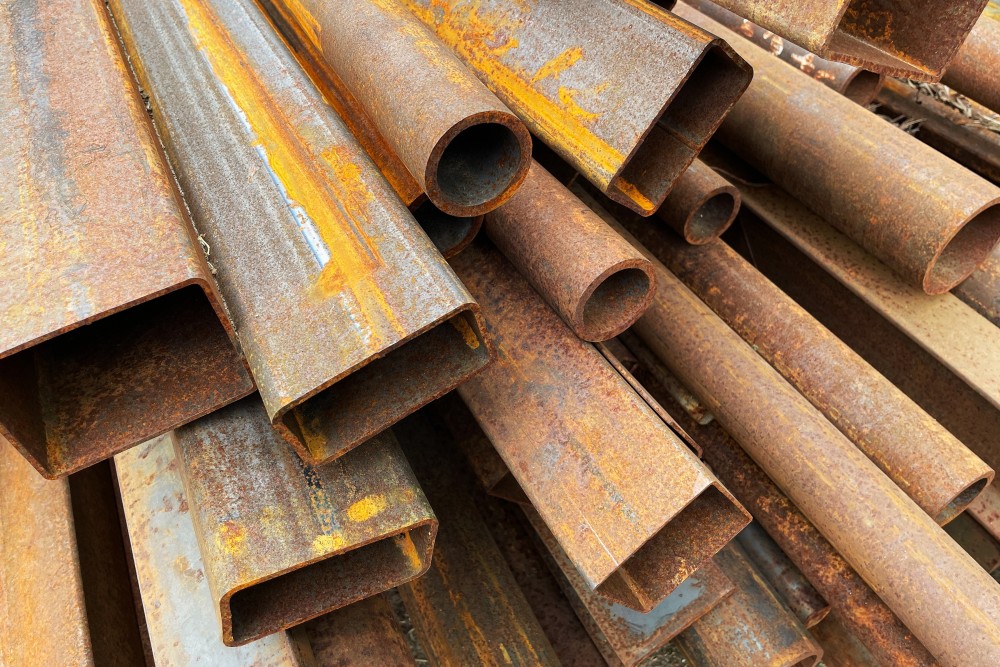
A pile of old steel left outside may look beyond saving. Once rust has spread across a gate, radiator or length of pipework, it is easy to assume the metal has to go to waste. But can you recycle rusty metal? In most cases, yes.
Rust affects the surface of iron and steel, but it does not usually prevent the underlying metal from being recovered and reused.
Rust forms when iron reacts with oxygen and moisture. It is common on steel items stored outdoors or exposed to damp conditions, including fencing, machinery, tools and building materials.
The amount of rust can vary considerably. One item might have a few orange patches; another might be heavily corroded and beginning to flake apart. Both may still be suitable for recycling, although severe corrosion can affect how much usable metal remains.
Usually, no. You do not need to spend hours sanding an old steel gate or cleaning rusty pipes before arranging a scrap metal collection. Metal recycling involves sorting and processing materials, so surface rust can generally be dealt with as part of that process.
It is more useful to remove loose rubbish and keep different materials separate where practical. For example, if you have a pile of steel offcuts, try to keep it apart from general building waste, wood and plastic. There is no need to dismantle anything that would be difficult or unsafe to take apart.
Many familiar items contain recyclable iron or steel, even after they have rusted. Examples include:
Some items contain other materials alongside the metal. A machine, for instance, may include oil, batteries, electrical parts or plastics that need separate handling. If you are unsure about an item, describe it when enquiring about collection so the recycling team can advise you.
It can. The value of scrap depends on the type of metal, its weight, its condition and current market prices. Heavy corrosion may reduce the amount of usable metal, while a load mixed with non-metal waste can take more work to sort.
If you have a substantial quantity of rusty metal, it is still worth asking for an assessment. A weathered appearance alone does not tell you whether the material has recycling value.
Rust specifically affects metals containing iron. Copper, aluminium and brass do not rust in the same way, although they can change colour or corrode over time. Copper, for example, can develop a green surface layer, while aluminium may become dull.
These metals can also be recycled. If you have a mixture, keeping different types of scrap separate can make them easier to identify and assess. Our guide to telling ferrous and non-ferrous metals apart can help you get started.
Rust does not mean your old metal belongs in a skip or landfill. Whether you are clearing out a workshop, renovating a property or replacing commercial equipment, London Surrey Metal Recycling can assess the materials you need removed.
Explore our scrap metal collection and recycling service, or contact the team with details of your load to discuss a collection across London or Surrey.
From site clearances to commercial kitchen strip outs, we offer a full range of metal recycling services tailored to your requirements. Trust us to handle your scrap metal efficiently and responsibly
londonandsurreymetalrecycling@gmail.com | 0203 883 2579
Environment Agency Registration Number: CBDU123456